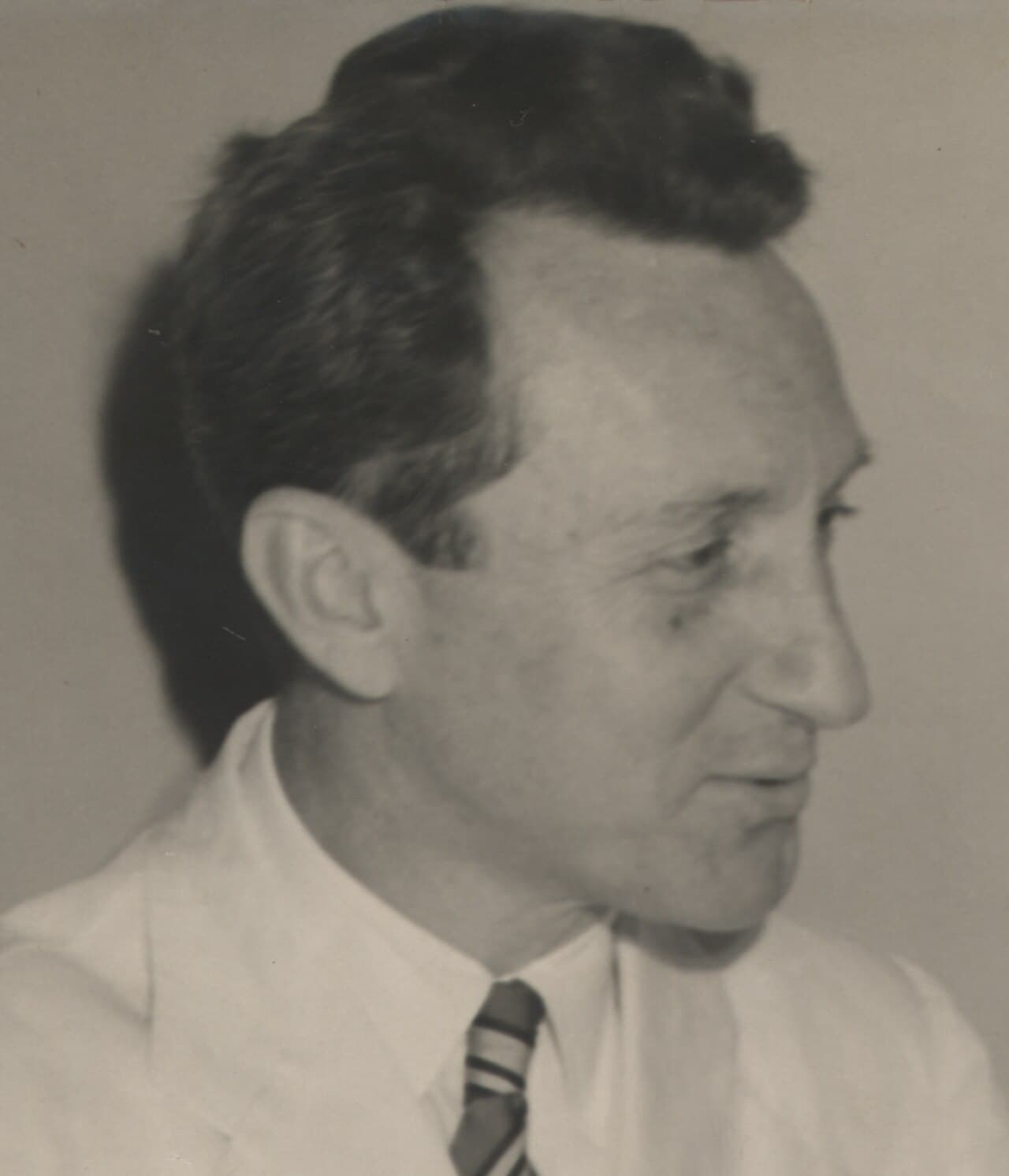
1902-1994
Carlos Gracie
He turned a few years of instruction in an Amazon theatre into an institution, and the machinery he built - an academy, a family, and a standing public challenge - is why one household's version of the art is the one that travelled.
Carlos Gracie was born on 14 September 1902 in Belem do Para, the eldest of nine children of Gastao Gracie. The family was on the wrong side of the rubber boom by the time he was a teenager, and Jose Cairus, whose academic account of the period is the most careful available, places their departure from the Amazon between 1919 and 1920, after which they returned to Rio de Janeiro with very little except a patrician surname. What Carlos brought back with him was a partial education in a Japanese combat sport, learned at the dojo established at Belem's Teatro Moderno from about 1916 under Mitsuyo Maeda and Maeda's senior local student Jacyntho Ferro. Cairus puts the length of that apprenticeship at no more than three years.
The important thing about that education is what it left out. Cairus notes that Maeda ignored the Kodokan belt ranking system, taught with little emphasis on the philosophical or pedagogical framework Kano Jigoro had built around judo, and was himself deep in the prizefighting business at the time. Students came away with an eclectic program that mixed judo with wrestling and no institutional scaffolding at all. Carlos Gracie spent the rest of his life building the scaffolding.
The first piece was a room. BJJ Heroes, drawing on Reila Gracie's biography of her father, places the academy at Rua Marques de Abrantes 106 in Rio in 1925, with George and Helio brought in to help run it. The second piece was publicity of a specific and durable kind. The first newspaper advertisement is quoted as an invitation to have your face broken and your arms snapped, and the academy's method of getting attention was to challenge practitioners of capoeira, boxing and wrestling in public. The challenge match was simultaneously a marketing device, a recruitment tool and a live test of the material, and it is the single practice that most distinguishes what the Gracies did from what other schools of the period did.
The third piece was the family itself. Carlos had twenty-one children by different mothers and awarded eleven of them black belts. He also delegated: as his other businesses took him away from Rio, the day-to-day teaching went to Helio, and later the fighting representation of the family passed in turn to his son Carlson, to Rolls, and then to Helio's son Rickson. Treating the household as the transmission mechanism meant the method survived the founder's own loss of interest in teaching it, which is not true of most martial arts schools of that generation.
He also produced the part of the legacy that has aged least well as evidence. The Gracie Diet is presented in the family literature as the product of decades of study of human and physical behaviour, and the twelve commandments circulated under his name are a self-improvement text rather than anything to do with grappling. Neither is dishonest, and neither is verifiable in the way a competition result is verifiable. They belong in a profile of the man because they show what he thought he was building: not a sport, but a way of living that happened to include fighting.
The claim that most needs handling carefully is the one about his own teacher. Carlos's account, given in an interview sixty-five years afterwards and quoted by Cairus, has him learning the secrets of jiu-jitsu under the paternal supervision of the Japanese master. Drysdale's archival work points instead at Ferro. Pedreira states that none of the Gracies met Maeda, with Carlos a possible but by no means certain exception, and describes Carlos as an unreliable narrator of his own life. None of that changes what he subsequently built. It changes only how much weight the certificate at the top of the chart can carry.
What changed because of them
He built the institutional form the art travelled in: a fixed academy from 1925, a standing public challenge used as advertising and as a test, and a family structure that transmitted teaching across four generations. The technical content came from elsewhere; the machinery for spreading it did not.
Where the record is contested
- Whether Carlos Gracie was taught directly by Mitsuyo Maeda is unresolved. His own account, given decades later, says he was. Cairus reports an apprenticeship under Maeda and Jacyntho Ferro; Drysdale concludes Ferro is the likelier source; Pedreira states that none of the Gracies met Maeda, with Carlos a possible but uncertain exception.
- The 1925 founding date, the street address and the wording of the first newspaper advertisement are reported by BJJ Heroes on the authority of Reila Gracie's biography of her father. That is a family source at one remove, and no contemporary newspaper record was located for this entry.
- Pedreira argues that the popular account of Carlos improving and Brazilianising what Maeda taught, with Helio later adding leverage, is a retrospective marketing narrative rather than a documented sequence of technical changes. No source consulted here documents a specific technique Carlos Gracie originated.
- The photograph is catalogued by the Arquivo Nacional as Carlos Gracie and dated 1951. The photographer is recorded as unknown.
Sources
- Carlos Gracie Sr., fighter profile and biographyBJJ Heroes · consulted 2026-08-04
- Jose Cairus, "Modernization, nationalism and the elite: the Genesis of Brazilian jiu-jitsu, 1905-1920", Revista Tempo e ArgumentoUniversidade do Estado de Santa Catarina, via Redalyc · consulted 2026-08-04
- Roberto Pedreira, "Top 20 Myths about Mitsuyo Maeda"Sonny Brown Breakdown (archive of Global Training Report) · consulted 2026-08-04
- File:Carlos Gracie (1951) (cropped).tif, image licence and provenanceWikimedia Commons / Arquivo Nacional (Brazil) · consulted 2026-08-04
Elsewhere in Guard Theory
Journal
- Maeda, and the arrival of judo in Brazil
Almost every confident sentence written about Mitsuyo Maeda is contradicted by another confident sentence, and the disagreements are more instructive than any tidy version of the story.